The publication of Japan’s first modern short story, Maihime (The Dancing Girl) by Mori Ogai (1862-1922) in 1890, had a major impact on Japanese creative writing – helping spawn a new type of modern literature in Japan. Ogai also launched a literary journal, Shigarami Soshi, Literary Screen, in 1889, one year before the short story’s publication.
Literary movements in Japan have often been centred on particular universities or groups of individuals and two Tokyo-based private universities helped mature and modernise Japanese literature after the publication of Maihime: Waseda and Keio University.
Literary journals, which are still important in Japan today, played a key role in this. Of particular importance was Waseda Bungaku, founded in 1891, one year after the publication of Maihime, by Hogestu Shimamura (1871-1918). It is still published today.
Like-minded groups from one university or one high school often working together on publications, such as the magazine published by Waseda and Garakuta Bunko, Library of Odds and Ends, (1885-1889), which was initially handwritten, helped creative writing develop and evolve in Japan.
Older than Ogai’s Shigarami Soshi and Waeada Bungaku, Garakuta Bunko is often cited as Japan’s first specialist literary journal.
Subsequently, the Keio University magazine, Mita Bungaku, founded in 1910 by Mantaro Kubota (1889-1963), with the help of the novelist Kafu Nagai (1879-1959), has played a similar role.
Another interesting magazine launched around this time by five pioneering feminists, was Seito, Blue Stocking, in September 1911. It was named after the 18th century British Blue Stocking Society.
In its first issue Raicho Hiratsuka (1886-1971) wrote: ‘In the beginning Woman was the Sun. She was the genuine being. Now woman is the Moon. She lives through others and glitters through the mastery of others. She has a pallor like that of the ill. Now we must restore our hidden Sun.’ The publication was controversial with several issues being banned by the authorities. It folded in February 1916.
These publications allowed aspiring writer and more established ones to share their work with like-minded people, creating new trends and distinct phases in Japanese literature be they realism, naturalism, anti-realism or feminism.
They also introduced works by trend-setting Western authors to Japan in translation such as James Joyce’s (1882-1941) experimental full-length novel Finnegans Wake in Waseda Bungaku, which was said at the time to be untranslatable.
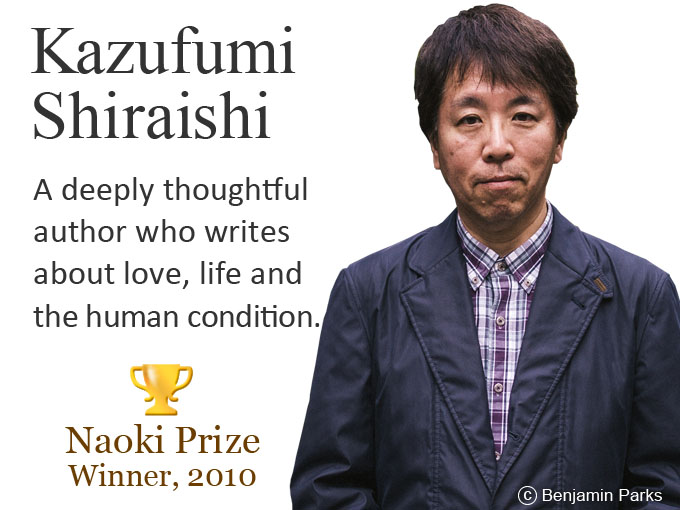
The Literature department at Waseda, which the not-for-profit Waseda Bungaku is part of has educated and been associated with many important Japanese writers including, for instance, Doppo Kunikida (1871-1908), Edogawa Rampo (1894-1965), Yoko Ogawa, Haruki Murakami and Mitsuyo Kakuta, whose early works were published in Waseda Bungaku, and Kazufumi Shiraishi; as well as Atsuzo Ishikawa (1905-1985), the 1935 winner of the first Akutagawa Prize, one of Japan’s most prestigious. Ishikawa, however, never actually graduated.
Wasada Bungaku now has a newcomers’ prize and alongside Keio’s Mita Bungaku, and the literary journals published by commercial publishers, still play important roles in nurturing and developing new generations of creative writing and literary criticism in Japan.
Literary journals, often run by like-minded individuals helped mature and modernise Japanese literature from the 1890s onwards
[UPDATED: 11-10-2026]
© Red Circle Authors Limited
Literary journals, often run by like-minded individuals helped mature and modernise Japanese literature from the 1890s onwards
Posted by